Save this article to read it later.
Find this story in your accountsSaved for Latersection.
We the Animalsis adapted from theJustin Torres novel of the same name.
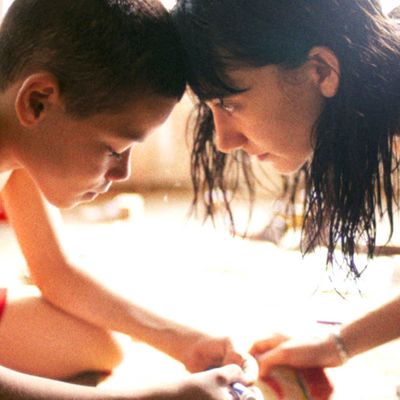
I showed him my movie, a documentary calledIn a Dream.
Its about my crazy family, Zagar says.
[Justin] saw that, and I was like,See, I have a similar experience.
Ive also chronicled the messy love of my family.
I believe in that shit.
With Torress blessing, Zagar adapted the novel into a lively and, at times, devastating coming-of-age story.
Zagar told Vulture about adapting the novel, working with child actors, and whytheMoonlightcomparisonsdont bother him.
How did you get your hands on Justins novel?
Who gave it to you, or when did you come across it?I was in this bookstore.
I had just come back from Egypt.
I was editing a movie calledThe Square, a movie about the revolution.
I decided that I was a revolutionary, that Id fight the Egyptian revolution with all these other revolutionaries.
We were all living in a house together.
And then I came home, and I realized Iwasntan Egyptian revolutionary.
Suddenly I was realized,Oh, I love stories.
I can fight for stories.
I believe in stories.
This is my fight, somehow.
I just started reading this book and immediately wanted to make this into a movie.
No ones ever seen this family on screen, and this is a family like my family.
This is complicated, messy love like our messy love, I get this.
So I bought five copies.
And I gave some to my producers, and I gave another to my co-writer Dan [Kitrosser].
Then I called Justin, and he met me.
What was that first conversation with Justin like?He was very skeptical at first.
Hes such an intelligent, emotionally astute, wonderful dude.
He also didnt want it to sit on some producers shelf for the rest of its life.
He wanted somebody who actually really wanted to make it into a movie.
How did you do shoot this very intimate, sort of spiritual vision?
We spent a couple nights in that house as a group.
But then when the boys would go home, they would live together as brothers.
They slept all in the same room.
Raul and Sheila shared a house, too.
It was as familial as we could make it within the confines of whats kosher.
And that might have even been a little overstepping.
In addition to that, when we were on set, we always allowed for moments of improvisation.
The film was very rigidly scripted and storyboarded and shot listed.
But what that allowed for was efficiency and then freedom.
It allowed them to say whatever they wanted, go off script, and do crazy things.
Thats a game that Dan, my screenwriter, taught them.
They would play on set as a warm-up.
One day we filmed it, and it was so funny and honest.
They kind of start humping each other, pretending to do weird sexy dances.
Its this wonderful boyish, alive thing thats just what they did.
My secret to directing cause I dont really know how [to direct] is casting.
I relied heavily on my cast.
I also had an acting coach on set at all times, this woman named Noelle Gentile.
She worked with the kids through the casting process, too.
She was with them for a year before we even started filming.
The scene that really moved me was when the boys see their dad cry and have to process that.
Hes just been fired, and their truck is being towed.
Theres something about familial love thats just mythic.
Id like to talk about filming some of the more sexual scenes.
That was a primary rule with all the actors, right off the bat.
We were never gonna push you into a situation.
I hear about these directors who manipulate their actors.
Thats so messed up and disturbing.
Thats a tremendously difficult and emotionally painful process, I think.
[The child actors] are never seeing the things you see.
Thats all the magic of editing.
Were just telling them ideas of whats in those scenes, not even really saying it.
So if theyre watching the pornography in the movie, theyre not actually watching pornography on set.
Theyre just hearing me say funny things that they can react to.
It was about them feeling confident in their craft and becoming professionals, in a way.
They were like,Oh, this isnt me.
This is this boy, and this story means something, so Im gonna do this.
Tell me more about that kiss and the conversations around it.
It issuchan incredible movie.
Its an American movie thats pushing the bounds for young people and their sexuality.
for do that kiss, it was really just getting right back to the ethos of the whole movie.
We just have to do the best we can to honor that.
When the boys understood that, it was clear for everybody.
IndieWire calledWe the Animalsthis yearsMoonlight.
What that reviewer was doing, I think, was elevating the movie.
WhatMoonlightproved is that kind of movie can reach wide audiences.
I like the comparison in that way.
The sexuality in [We the Animals], and the thematics, are not really as applicable.
Theyre both small, intimate movies that feel epic and big and should reach wider audiences.
I lost faith in the Oscars years ago.
When I was a kid, I used to love the Oscars.
It was so epic.
Maybe when James Franco hosted, or something, it fell apart for me.
I was like,What are these?
Thats not to say I wouldnt go, but it doesnt have that mythology.
That you’re free to be aMoonlightand win an Oscar is cool.
Why?Hes in the movie.
We were cutting it into the movie at different places.
you’re free to also see my wife, but you see her foot.
And my son there is nothing more epic and mythic than the birth of your child.
And theres nothing more universally thrilling.
