Save this article to read it later.
Find this story in your accountsSaved for Latersection.
But the story didnt end with that trial.
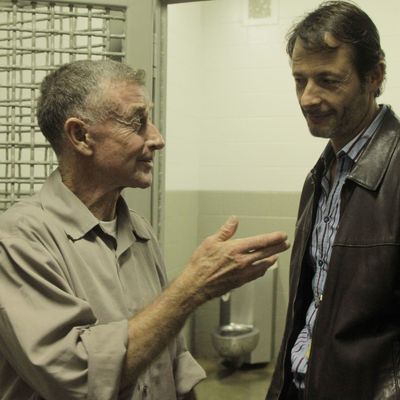
(The conversations took place separately, but are weaved together here.)
That case involved a black teenager who was accused of having killed a woman.
He came from a very modest family, and he had a public defender.
I reviewed maybe 300 different cases, and then we met with Michael Peterson.
I felt right away that he was a very good character.
You could feel that when he was talking about his love for Kathleen, it was very sincere.
On the other hand, you could also feel maybe he was hiding something.
The day after, I met with the prosecution team.
The first thing they said to me was, Michael Peterson is evil.
It wasnt, We have huge physical evidence and we know he did it!
It was, He is evil.
It was much more about who he was and where he was living than anything else.
Related Story
David, did you have misgivings about the cameras?David Rudolf: Many.
I have never allowed my clients to be interviewed before a trial.
I am opposed, generally speaking, to cameras in the courtroom.
I still had misgivings.
The agreement we ended up reaching was that they, initially, would in essence be filming for us.
And the agreement was that there would be no documentary shown to the public until the case was over.
All the material that we filmed was sent to Paris and put in a box.
I cut the first eight episodes, David Rudolf watched those to review if something could harm the appeal.
He had to do that.
He really played fair.Did you have any sort of ethical struggle with that arrangement?JXL: Of course!
But it was a fair exchange.
I dont know how it would have been resolved.
Maybe the prosecution felt that their case was not so strong, and they closed the door.
Obviously if youre not talking to the filmmaker, then the filmmaker doesnt have that perspective.
Its a fair point, but not one you’re free to blame on the filmmakers.
Having said that, what they showed of the trial is what happened.
We kept trying to shoot with the prosecution and with Kathleens family.
I really wanted them to be in the film.
But because they refused, we were much more close to Michael Peterson.
Its more his point of view, yes, but I really tried to be objective.
But its the real world, its impossible to be objective.
I hope that I let people think what they want.
If they think he is guilty, thats fine.
The purpose of the series was never to let people think Michael Peterson wasnt guilty.
Its the mystery of Michael Peterson that was really interesting.
What he told me at the end of the last episode was great.
In a way, he felt guilty about that.
He tried to hide his desire.
Its the key of the character, to really understand who he is.
To me, there was huge reasonable doubt.
I am not saying that I think Michael Peterson is innocent.
What happened that night is still a huge mystery.
But during the five-month trial, his guilt was not proven to me.
You could feel it standing there every day, that maybe it was not totally fair.
Maybe the prosecution did a very good job, but they didnt play fair.
Theres a moment where you come from behind the camera and hug Michael.
Did you consider taking that out of the movie?
I was not so comfortable with that, to tell you the truth.
At that moment, I was happy for him.
And to me, it was a victory for justice.
I was happy for that.
That was a man who spent more than eight years in prison.
I really struggled to let it in the film or not, that image.
Because, yes, it can be seen as very biased, of course.
They never went out for drinks or dinner or anything like that, that Im aware of.
He empathized with him as a human being.
When you read a transcript of testimony, its black and white.
You dont see facial gestures, you dont hear the intonations.
Its just a cold record.
He could see Deavers expressions, he could hear Deavers tone of voice.
He could see Deaver looking at the jury and lying to their faces.
I dont think we would necessarily have gotten a new trial in the absence of those videos.
JXL: I know Michael believed that at some point.
He was really grateful to us, but I dont think we played any role.
We were just there, we shot, and nothing else.
I never went to see the judge and told him to change his mind!
We tried to look at the justice system, but not to be involved.
How did you feel about Judge Hudsons interview at the end?
Admitting that what you did was not legally correct took a lot of guts.
I just wish it had been 16 years earlier.
I assumed that the owl theory would be covered in these new episodes, but it wasnt really mentioned.
In the closing argument, youre limited to evidence thats been presented at trial.
JXL: The purpose of the film was to follow the legal process.
But because it was never introduced inside the courtroom, I decided not to talk about that theory.
Its really a mystery, the way she died.
