Save this article to read it later.
Find this story in your accountsSaved for Latersection.
I am so sure that Im right about virtually everything.
Even among fervent fans, his milestones are far from common knowledge.
To his surprise, he finds that crowds now pack convention halls to see him speak.
It seems doubtful thered even be a movie about him today if not for Priests refurbishing.
Yet Priest himself has been chronically underappreciated.
Priest is nothing if not candid about his own career and the industry as a whole.
Still, he sees his predicament as part of a larger pattern.
Who was the first woman editor?
Who was the first woman penciler?
But these things do count, and they really do matter.
Young James was, to put it indelicately, a dweeb.
And the kids in his neighborhood werent very fond of dweebs.
It was a fairly hostile environment, Priest recalls.
I got beat up a lot in that environment.
I was mugged in that environment.
I had guns pointed at me in anger in that environment.
Later in life, hed write about lower-class black urban life which he remembers unromantically.
I cant stand being poor.
But the closet also brought a kind of aesthetic solace for young James.
Id go in there and Id read comics, he says.
Their contributions should not be understated.
As for Priest, Shooter has nothing but praise.
He was crazy, high energy, and did everything you could ever ask of him, Shooter says.
He started to wear roller skates so he could go back and forth on the floor.
He was a really great kid and loved being there with all these creative people.
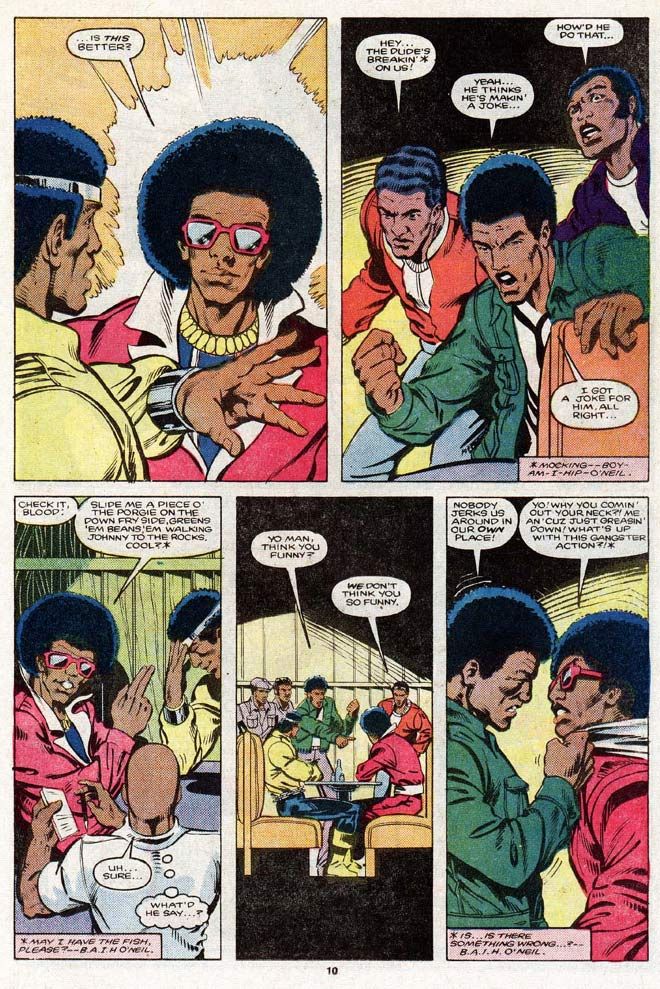
Then he was put on the long-running seriesPower Man and Iron Fist.
Theres a splendid scene in issue No.
He say, And perhaps some collard greens!
Check it, blood!
Slide me a piece o the porgie on the down fry side, greens em beans!
the alien shouts earnestly.
The patron grabs him by the collar.
Youre not funny, white man.
Few in mainstream comics were doing comedy this envelope pushing.
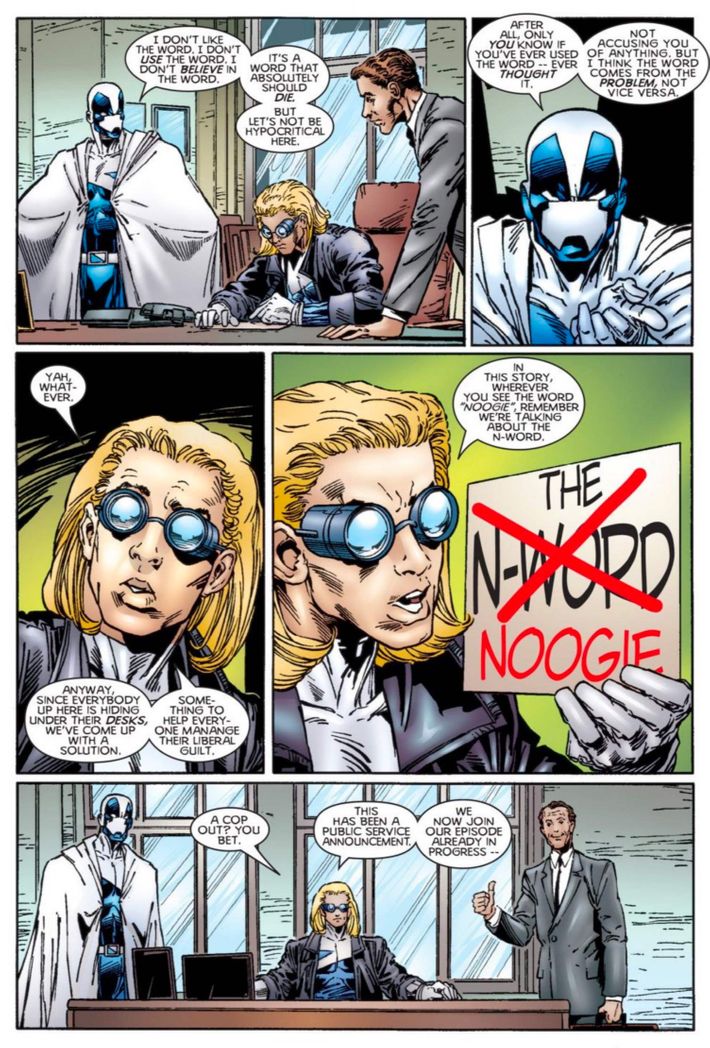
Unfortunately, Priest wasnt as successful when he wasnt holding the writers pen.
His tenure as an editor was a disaster.
He wasnt good at that, Shooter recalls with a laugh.
He was put in charge of the Spider-Man titles, which he says was an incredibly bad call.
I am a genius!An artist!This building will be mymasterpiece!
And ournightmare, whispers one of the employees.
Priest continued writing, even as Shooter was ousted from the company, removing his final quasi-friend.
That bothered me more than anything else, he says.
During this period, Priestentered the sights of DC editor Mike Gold.
It was difficult to hire any black person back then, because it was an old white-boys club.
Youd get a lot of questions like Why do you want him?
Boy, I hear hes not reliable, Gold says.
Priest initially declined, but Gold was persistent.
Priest eventually took the gig in 1990 but kept his bus drivers job as a backup.
He raised eyebrows for putting up a poster of a gun-toting Malcolm X over his desk.
It was during this period that he started going by Christopher Priest, to the confusion of his co-workers.
He left DC for nearly 20 years.
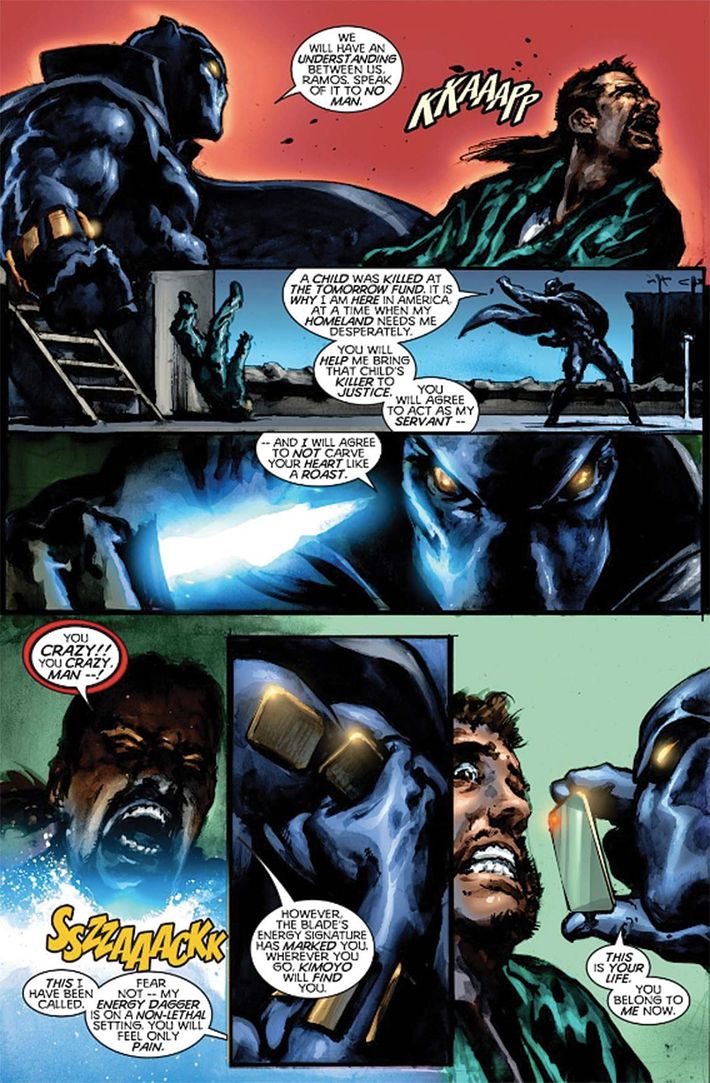
As the century ended, Priest wrote two series that are his greatest legacies:Quantum and WoodyandBlack Panther.
The former was a project with artist M.D.
By 1998, Marvel was in a financial tailspin and furiously tossing out new ideas.
One such project was the Marvel Knights imprint, a stab at telling edgier stories about classic characters.
Among them was Black Panther a character that Knights editors Joe Quesada and Jimmy Palmiotti thought had potential.
When they approached Priest about writing it, he was less than enthused.
I mean, Black Panther?
Who reads Black Panther?
Respected and successful, Bing nevertheless was the horrified fish out of water, Priest later wrote.
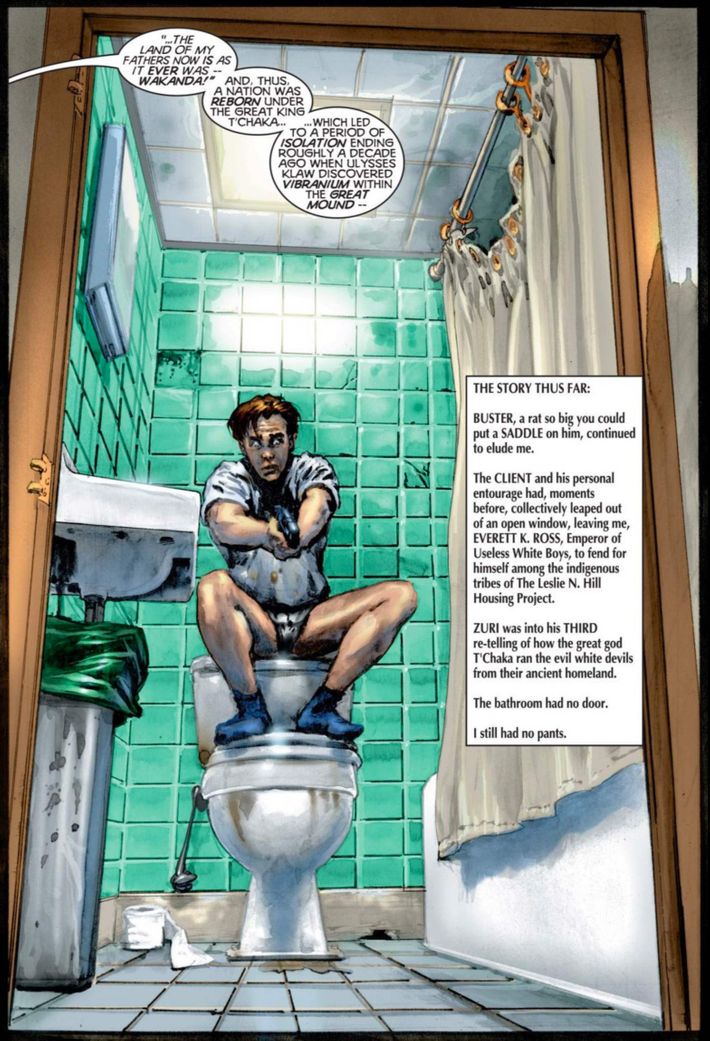
It was a genius move that allowed a book about a stoic superhero to be hilarious.
BUSTER, a rat so big you could put a SADDLE on him, continued to elude me.
The bathroom had no door.
I still had no pants.
The tone was set, and one of the great comic-book writing stretches had begun.
The run lasted for 62 issues and is still the definitive take on the character.
Nevertheless, Priest was once again dissatisfied with his treatment at Marvel.
Black Panther ended, and a quasi-spinoff calledThe Crewwas canceled after just seven issues in 2004.
It felt like I just was wasting my time, he tells me.
Everything I do gets canceled, and Im never gonna be put on a top-tier book.
In 2005, he walked away from comics again this time, it seemed, for good.
He did web-design work for various churches in Colorado, where he lives.
A longtime musician, he played at worship services.
To be perfectly blunt, I think I was probably happier doing that than writing comics, he says.
He was just peeved about what he would periodically be asked to write.
Every 18 months, Id get a call from Marvel or DC and theyd say, Hey.
Were bringing backAll-Negro Comicsand we want you to write it.
We want you to do Black Goliath.
We want you to do Black Lightning, he says.
Then, something remarkable happened: Priest was offered Deathstroke the Terminator, a DC character.
My first question was Is he black these days?
They said, No, hes still a white guy.
And I went, Okay, Im listening.
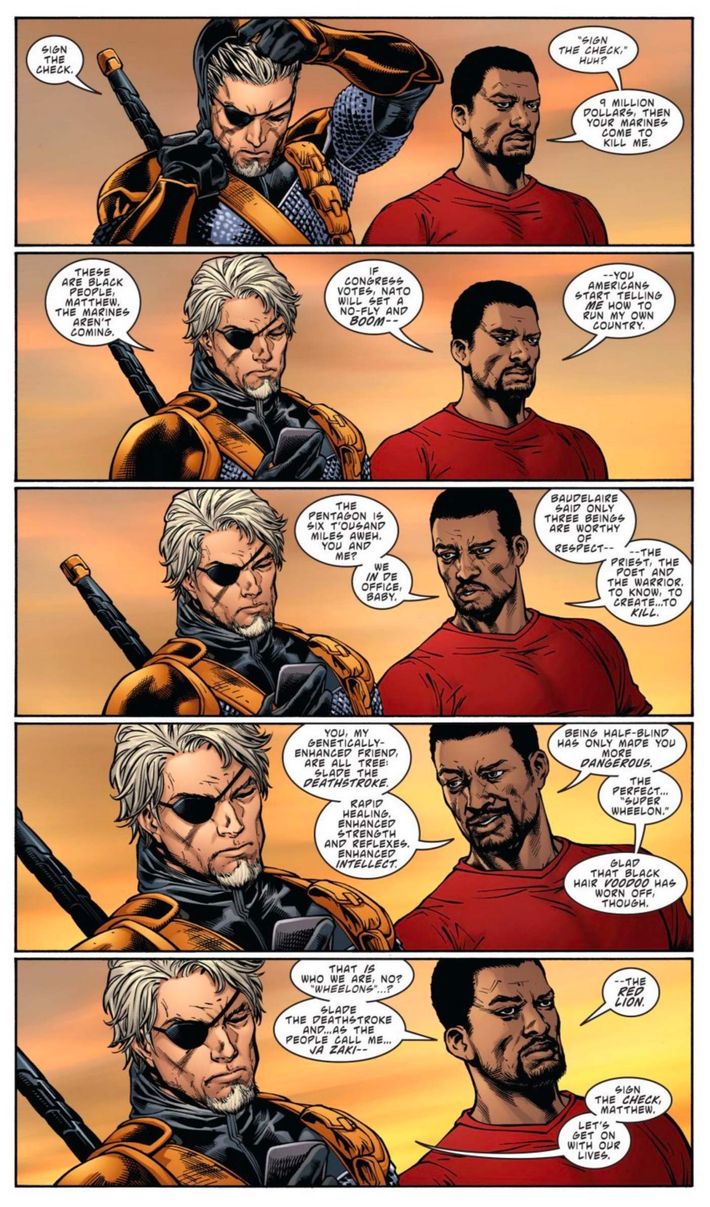
Priest agreed to write a new series,Deathstroke,as part of a DC initiative calledRebirth.
They were not disappointed when the title began publishing.
The warlord says he thinks America might send in Marines to stop the ongoing conflict in the region.
These are black people, Matthew, Deathstroke tells him.
The Marines arent coming.
Priests career has been on an upswing ever since.
Last year, he helped launch anew superhero universefor indie publisher Lion Forge.
Im a little insane, and Im going to be a little different, he says.
*A version of this article appears in the January 22, 2018, issue ofNew YorkMagazine.
