Save this article to read it later.
Find this story in your accountsSaved for Latersection.
Theres a sequence early on in Talal Derkis documentaryOf Fathers and Sonsthat makes your blood run cold.
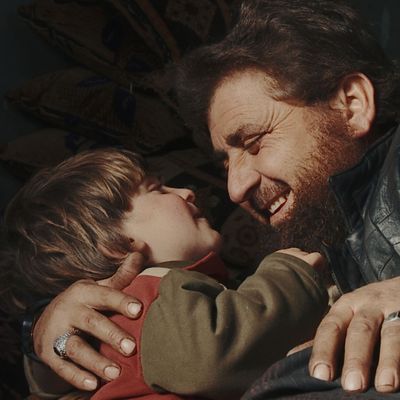
A cheerful preteen boy finds a bird and shows it to his father.
The father recommends that he kill the bird so their family can eat it.
After its been killed, the boy returns to his father and gleefully reports on the slaughter.
How did you find your main subject, Abu Osama?Lots of research.
They all united in this place in the north of Syria.
I had many fixers.
Otherwise, they would not give me the access.
They build all those terrorist groups.
This is how it works.
I said I was a very experienced cameraman and they were very positive about that.
They gave me support, gave me contacts, and they gave me this access and didnt harm me.
But if they had just one doubt, I couldve been destroyed.
Because Im secular, I dont have any religion or anything.
Thats a red line for them.
How could they not have been more suspicious?That was my fear all the time.
I worked inside and outside of Syria for two-and-a-half years, like an acrobat, you know?
So I was an actor and a filmmaker at the same time.
More than 330 days.
How big was the crew?In the village, we had only two people.
The other was a cameraman.
He sympathized with them.
He really sympathized with them.
But hes a coward.
He never carried a weapon.
Now he doesnt talk to me, now that hes figured out what kind of film I was making.
Do you feel bad about deceiving this guy youd taught?No.
I didnt have another option.
I needed to make my film.
I wasnt a spy that was giving information about people, saying, Bomb there, or whatever.
I just captured moments that can answer questions for the audience and for me.
What questions did it answer for you?
What do you understand now that you didnt understand before you shot the film?Who these people are.
What their motivation is.
What the keys are.
How we can prevent this from happening in the future.
What the circle of violence is.
And what the legacy of war is and what they believe in, the mythology behind their beliefs.
I call it mythology; they call it Gods law.
This is how we can dismantle it.
This is a war against ideology, not against specific people or groups.
They dont have names.
They get killed because they ask for it.
This is their quest, to be killed for Allah.
To be a martyr.
Then a new generation continues and a new generation, etcetera, etcetera.
We cant make people not believe.
People need belief because its the hope for what happens after death.
We cant get rid of religion.
But what we can do is take the violence out of religion, out of society.
Theyll be against violence because thats how they grew up.
Especially when I was back in Berlin.
I was a shadow, a ghost of a person.
When you have a percentage that its possible youll get killed, you cannot be satisfied.
You cant be fine with it.
Now that the shooting is over, even though it was two years ago, Im still recovering.
It changed me totally, this film.
I will never do something like this again.
I dont have the power to take that risk again.
Because this kind of risk … its not that Im on the front line.
I have a skill for that, filming and knowing,Theres a sniper.
[Rolls up right shirtsleeveto reveal a tattoo of rings around his wrist.]
I got this tattoo so I wouldnt go back.
Because tattoos are forbidden and if they saw it, theyd know you werent really religious?Yeah.
I knew it was the only way to prevent myself from going back and being in real danger.
Did al-Nusra ever come close to figuring out that you were lying?No.
Even after filming, he communicated with me Abu Osama after the end of filming.
I have to block all your accounts, you and your friends, until everything goes away.
And he said, Yes, yes, Abu Youssef this was my nickname dont worry.
Write me; call me when you feel safe.
I never called him.
And I heard that he was just killed.
The 17th of October of this year.
Two, three weeks ago.
Oh, wow, Abu Osama just died?Yes.
He was dismantling a car bomb.
Someone was filming him from his mobile at the moment he was bombed.
Have you watched the video?I watched the video.
Its far away, but its clear what happened.
Two of his brothers are threatening me, and some people I dont know.
Some people suddenly sent me messages theyre jihadists they say, You dont have a right to publish this.
Are you worried about that?Im worried, yeah.
I stopped doing interviews in Arabic.
Have you taken security precautions?
Do you have a bodyguard or something?No, no.
That would be for neighbors or people in your area they can stop them.
But these people, if they want to do something …
They do it.They do it.
And, at the same time, I dont want to live in fear.
Freedom, for me, is the most valuable thing.
To have a bodyguard?
To have police at your door?
Its the worst thing it’s possible for you to ever have.
I want to talk about a specific scene.
Because it happens all the time.
When you have a father like this, what can his kids play with?
What are their toys?
Filming it was really … my adrenaline rose more than in any other scene.
Its a game for kids in this village.
For me, it was a moment when I said,I have to do this.
I have to put this in the film.Because people should know.
This is what the film is about.
What was the moment during filming when you were most frightened?I mean, there were many moments.
I wasnt living with the family anymore.
I was living with a warrior, a fighter, a jihadist, someone I didnt know.
I had to be really certain about waking up and praying in the morning, how to present myself.
People would come and ask me questions about my background, about what I do.
I always had to be aware and present myself correctly.
A simple mistake could destroy everything.
Did you ever see one of the boys get hit by a bullet?No, no.
At least where I was, it didnt happen.
But that was happening often.
Nothing bad happened that I saw.
But it can be.
I tried, in most of the film, to not show direct violence.
Only when they kill the sheep.
Right, the scene where they ritually slaughter a sheep.
This is a moment where they are sacrificing, and sacrificing is the main idea of the film.
The father is sacrificing his sons, even when he shows love to them.
How has the movie been received in the Arab world?Its been received well, actually.
Not only to jihad but to the mentality of fathers, of masculine power.
Its a dictatorship, the masculine power of fathers in our society.
But do you think youll go back when the war is over?No.
I made a lot of enemies because of my films, and those enemies are dangerous.
And life is short, you know?
You cannot change anything.
Im 40 years old, and I dont want to end in a tragic way.
Its an interesting project.
Well talk about it soon.
And also I want to write a script, fiction.
I have something in my mind and want to do it.
About Syria?Not about Syria.
I told you, Im still recovering.
I work in mythology.
Its about people who are really special, in a way.
I look at his smile.
We look at nature.
I dont know about hope, but we need to keep struggling because we exist and we deserve better.
A human has this brain, and he can make a world better than this one.
He can make things easier, make less tragedy in our lives.
You wont take any steps farther.
You wont change anything.
This is the meaning of struggle: hope.
Of Fathers and Sonswas nominated for an Oscarin 2019 for Best Documentary Feature.
