Save this article to read it later.
Find this story in your accountsSaved for Latersection.
The origin story of Starzs new seriesVidais as refreshingly unusual as they come in Hollywood.
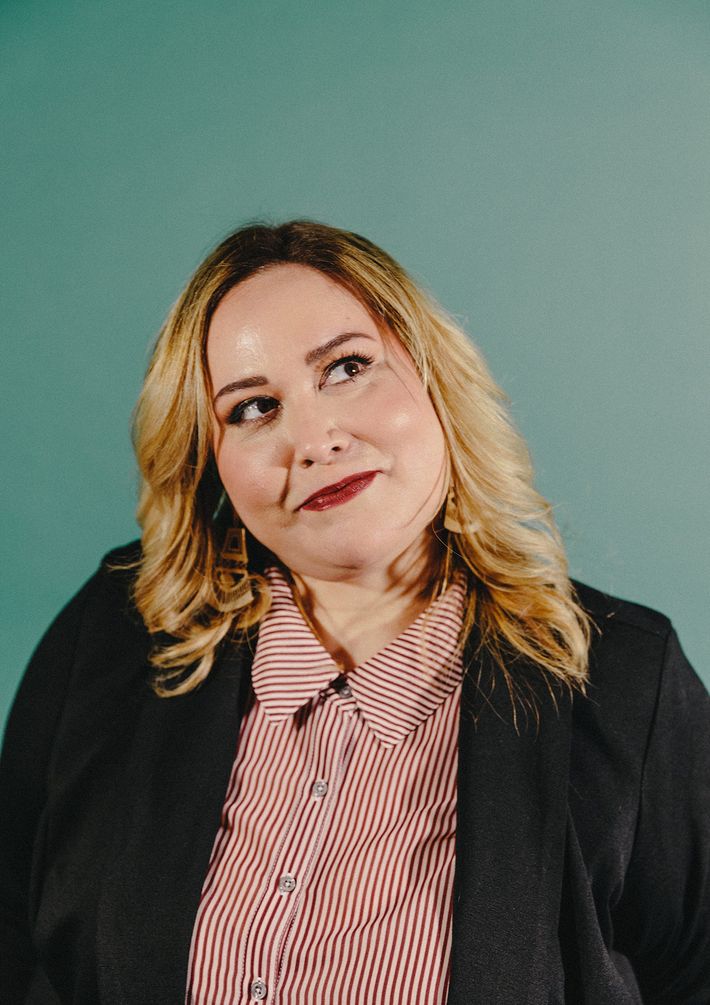
Saracho assumed they were going to discuss possible employment as a writer on a Starz show.
But Fernandez wasnt offering her a staff writer position.
She wanted Saracho to create it and run it.
Although the procedure was successful, she caught an infection in the hospital that required emergency surgery.
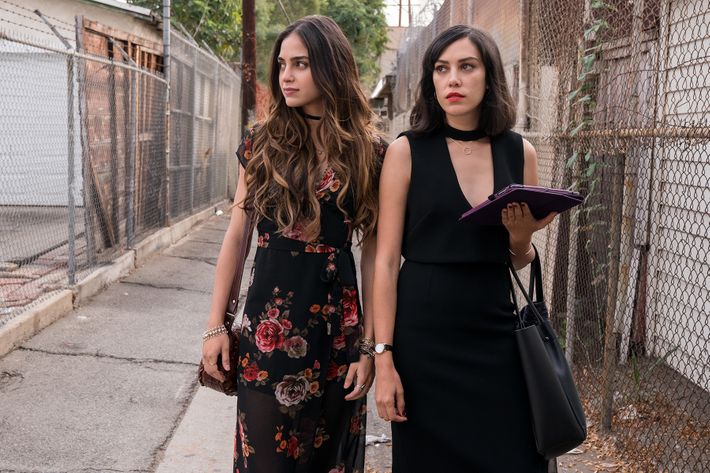
Woven throughout are questions of colorism, classism, homophobia, and sexism.
In January 2017, Starz greenlitVida, giving Saracho two weeks to staff her writers room.
Tanya, lets begin with how the story evolved.
Starz pitched you a basic theme.
How did it develop for you?
Have you heard of the term chipster?
And I was like, Of course, Chicana hipster.
Have you heard of gentefication?
And I actually hadnt heard of that term.
Timeshad just written an article about it a few months ago and I should take a look.
Its the gentrification of Latinx space, usually by upwardly mobile Latinxs.
I thought that was fascinating.
She asked if I could do a pilot and I said, Of course I can.
Not knowing more than that millennial female.
It felt like a race because there were five other Latinx projects under consideration at Starz.
Im sure they were great.
I dont know how were here.
And I emailed her and she never responded because shes a hot ticket.
Its because I dont check emails.
CL:But we followed each other on Twitter as fellow TV writers.
And I was tweeting aboutOutlander[about four years ago].
TS:I wanted to talk aboutOutlanderwith anyone!
And then Santa I met because we belonged to this Latina TV Writers Group.
Theres, like, 72 of us now.
You have to be staffed at least once its not just aspirational.
Evangeline Ordaz:Its amazing.
So many people I never would have met cause were never in rooms together.
How many people did you see in total?
TS:I read 152 people.
I didnt finish the whole scripts, but I read all those people.
Ireallyread the 13 that came in.
CL:I would not say thats common.
She wanted to read everyone in our community and just get really solid people.
TS:Starz has the final say.
So whomever I send has to be excellent.
Who happen to be Latinx.
For me, that was a big deal.
The proof is in the pudding, in that script.
And also in the meeting.
So I would I say, Say everything you said here, Mando, to Marta Fernandez.
That was brilliant, but youre wasting it on me.
I couldnt just be all,Im staffing my friends.
From the beginning, you had made up your mind you would have an all-Latinx staff.
Did Starz venture to talk you out of that?
Some people from the union.
Old-guard people of the dominant culture.
EO:Los gringos.
TS:They were like, Why would you wanna do that to yourself?
Just staff the best people.
And I always thought, Iwillbe staffing the best people.
The best people for this job are the best writers who happen to be Latinx.
Maybe not other shows I do.
I do think when you see those first six episodes, you get that intimacy you couldnt have.
Everyone has cultural shorthand in this room.
It happened too with the directors and the cinematographers.
What has it meant to you all to be in this room together?
EO:We all operate in the dominant culture.
Theres still a part of you thats missing when youre operating in that world.
And you go home, and all of a sudden, you might just relax.
you might talk like you talk.
Youre not putting on the white talk.
Thats how it is in this room.
you’re able to be who you are.
Its just so easy.
Jenniffer Castillo:Ive been an assistant for five years in four different rooms before this one.
Ive never felt this comfortable.
That never happens in this room.
When I leave at the end of the day, I dont feel as emotionally tired.
Ive been in good rooms before, too.
Its just that your time and energy isnt as taxed sometimes.
JC:And its not just the language, its also the cultural awareness we have thats very different.
All of the things!
EO:Hopefully not, right?
Nancy Mejia:Its funny how people see this as this revolutionary act.
But were not reinventing the wheel.
Were merely telling our own stories, from our own experiences.
I keep telling people its amazing we prove that the community isnt monolithic.
We share cultural roots, but we all have different experiences.
Where did you connect the most?
EO:Mine is really obvious.
Before I became a writer, I was a public-interest attorney and I represented a majority-low-income neighborhood.
Those are my clients.
CL:For me, the obvious ones are having two Latina leads.
I love that its centered around family.
Familys really important to me.
I got to explore that a lot in [episode four] and that was really great.
I talked to him a little bit about my episode and he was blown away.
We dont really get a chance to do that on television.
Its usually like theyre an immigrant or a drug dealer.
So I was likeOkay, lets do some work.Lets show we can do it.
TS:A lot of it is sourced from me so I wont say whos my favorite.
But what Im most excited to put on cable TV is the wordpochoorquiovoleorcarnala.
Very specific Mexican-American slang.
That is the biggest most radical political act because we havent had that presence.
This was just a show about a family.
Thats what attracted me, because when people come to me with projects, its usually about drugs.
It was refreshing as a writer to be like, I dont even have to think about that.
My mind doesnt have to go to this dark place.
It can just go to this human place.
The whole Emma story, as well, with her mother.
I know what its like to be rejected by your own mother because of your queer identity.
My relationship with my mother will never be the same because she does not accept me and my partner.
They did not attend my wedding.
We had abrujacome in, Sabrina, and she was like como se dice?
TS:Una limpia!
JC:She said, Im taking the weight of people that youre carrying.
Im feeling your mother.
As soon as she said that, she goes, Is your mother still alive?
And I just burst into tears.
I didnt realize I was holding onto that.
And to me, my mother died when she decided not to go to my wedding.
[Tears up.]
So theres totally that.
How do we exert that privilege?
Mando, I am curious about your experience working in a room where you are the only man.
That kind of dynamic doesnt really ever enter unless its for a joke.
CL:I didnt realize consciously that you were gonna be the only dude on this show.
Especially because our writers assistant is male, whos also awesome and from South Texas.
But I was never worried about Mando in a room.
Hes always in a room with ladies.
Hes always so awesome and thoughtful, creatively and personally, in a room.
MA:If you look at it macro, its the #MeToo movement, right?
So, for me, its growing as a man in Hollywood.
Its things to be aware of, but I take that out everywhere.
My own privilege sometimes I have to confront that.
TS:There were some things you hadnt realized before.
Now, the thing I realized was that its a group dynamic.
If a group dynamic is of the same and there is the other, the other will be otherized.
I understood that feeling and that was really eye-opening.
So you were working when theHarvey Weinsteinstories broke and the #MeToo movement started.
Did that enter the conversations in the room?
CL:We were in the safest room in Hollywood.
The #MeToo movement is something that we, as women in Hollywood, have always been aware of.
There are people and situations that you should worry about.
We were all aware of bad things before.
Can you give some examples?
JC:There was a room I was very engaged in, and I felt my opinion counted.
But they singled me out for this one lesbian scene.
They were like, So how do we do the sex for this scene?
I spoke out and I told them.
In this show, I talk and I contribute a lot more than just the sex scene.
But there, I was specifically pointed out for that.
It was an all-male room and I was an assistant.
There were two assistants that were women.
And I remember one of the male staff writers felt uncomfortable.
And I go, Whats a diversity hire?
Id never heard that term.
Id just gotten to Hollywood, you know?
And he goes, Oh honey.
I was like,That doesnt feel good.
I think diversity hires a bad thing.So I called my agent and Im like, Whats a diversity hire?
And I said, Well, should it get in my head?
Am I a staff writer?
Am I working for the show?
Like, do I have to be here everyday?
What is my role?
He said, No, youre fine.
Youre just like any other writer except you dont cost the show anything.
I was the playwright.
And then you get there and its like that.
You dont speak up.
I am not a quiet person.
I was the quietest Ive ever been.
Also, I had a showrunner that was not so down with the cause.
Not very woke, you know?
MA: And you were doing a Latinx-based show.
Has anyone else been the diversity hire in a room?
EO:I was.
In my case, the showrunner did try and make me feel like everybody else.
Everybody had an office.
I had an office.
The affirmative action days.
You feel like,I dont really belong.
It was the same thing here.
It does silence you.
I wasnt consequential to the room.
Were there other women?
There were other women, and they were not supportive.
It was really terrible.
And there was one Latino director hired that year, and, and he was treated horribly.
Then I realized,Oh!
Theyre treating me the same way!
EO:Again, a Latinx show.
MA:Thats crazy, right?
You are thrown in a place with different personalities.
Sometimes with people that have been there before, and there are certain politics you have to navigate.
So you just sit there, like,What can I say?Who should I approach?
Its funny how the systems made.
SS:Thats the way you have to see it.
This is just a stepping stone.
I always tell new writers that its okay to not be perfect your first time.
This is supposed to be fun.
This is not supposed to give you a panic attack.
NM:Technically, I was the funded position [atVida] for season one.
NM:Notice I said funded because I know you dont like that word.
A person cant be diversity.
JC:In TV, it was last year when I watchedOne Day at a Time.
[Elena is] Cuban but Im Puerto Rican, and were pretty darn close.
Shes queer, and shes having this complication with a quinceanera.
So that was the dream version of what my life could have been.
TS:I rememberResurrection Boulevard.
I dont remember all of it.
And then Latinx were gone for alongtime.
Not for another 12 years or 15 years, or however long.
They triedCanefor a season.
You know, they tried.
MA:Yeah… no.
Theres a scene inCaneIll never forget because I hated it so much.
He drinks his coffee, and I just wanted to punch him in the head.
TS:Probably a Cuban was not writing that!
MA:No, that was probably a white man.
SS:For me, thats a complicated question to answer because I am a black Latina.
And I still dont see myself much on television.
The black Latinos that are in Hollywood are playing African-Americans, so I never really did see myself.
But if I have to go back, I remember Fez (Wilmer Valderrama) fromThat 70s Show.
I identified with him because I had an accent, too.
I was really quiet in high school because I internalize a lot.
I came here at 14 and I didnt speak a word of English.
And Fez was the funniest character and everybody loved him.
Thats how we often exist.
Its like a form of cooning they make us do.
SS:The accent is a little bit like blackface.
You see it withModern Family.
I love that show.
I think its a brilliant comedy.
But, again, having an accent doesnt necessarily have to be paired with having less intelligence.
I remember so clearly.
I was used to people in Mexico laughing because I was a clown.
But this was the bad kind of laughing.
And that stays with you.
CL:The first thing I remember isSesame Street,and I just held on to that.
MA:La Bambafor me.
Chicano kid coming out of the barrio.
It was Luis Valdez.
They were all, like, truth-telling.
They were sticking to their guns the way they were telling a story.
CL:Those were my first words, La, la, la bamba!
I watched that so much when I was little!
TS:Its epic.
No other movie has navigated mainstream and Chicano culture like that ever again.
Im wondering what youve been thinking about in terms of the Latinx community.
We have the numbers, but we dont have the voice.
Are there lessons to be learned from black Hollywood?
What can Latinx Hollywood do to become more visible and successful?
TS:We talk about this a lot.
We are 18-to-20 percent, depending on what you read, of this country, right?
Black American culture is 12 percent.
But, withVida, we have now five shows on American television.
Thats less than one percent.
We dont know why.
Why are we invisible to the media?
Why do we not have a voice?
Obviously, we have talent, so thats not it.
Its that we are not valued.
We dont got the bank.
EO:I think thats the key.
The thing Ive always said is that, historically, there was a black free class.
There were historic black colleges.
There has always been a black middle class that has had resources.
And theyve been integral to promoting black advancement in all areas.
For the Latino community, by definition, were this immigrant community.
You dont immigrate unless you absolutely economically have to.
Which means youre just barely trying to get your foothold and struggling to survive.
Historically, we havent had a moneyed class, and money is power everywhere, but especially in Hollywood.
TS:Voting power, too.
And sometimes we dont have voting power.
And thats a positive thing in that, yes, there should be more stories.
Our group is slowly starting to find that.
TS:Theres one black American narrative.
you’ve got the option to trace it.
There are 27 countries that make up the Latin diaspora.
How can we have one narrative?
MA:But we can support each other.
TS:Under that one umbrella, agreed.
Like the way thatOne Day at a Timespoke to you and speaks to me, hopefullyVidawill speak to you.
Because, you know, its a construct.
This Latinidad is a construct, so were all under this umbrella.
And there are some similarities, so lets support.
SS: We all speak the same language.
TS:Brazilians dont, but yes.
SS:But even that I can understand a little bit.
Ive had this conversation with executives, and the many different countries confuse them.
So they target the big ones, like Mexico or Florida and the Cubans.
Or in New York, we have Puerto Ricans.
Thats the other thing.
Its not just the differences in native countries, but the regional differences, too.
Mexicans in Texas and California, or Cubans in Miami and New Jersey, are not necessarily the same.
MA:Right but, again, you’re free to tell a story of colorism.
Colorism exists in all our cultures.
That is our narrative.
