Save this article to read it later.
Find this story in your accountsSaved for Latersection.
Then he stopped performing there as much, and then at all.
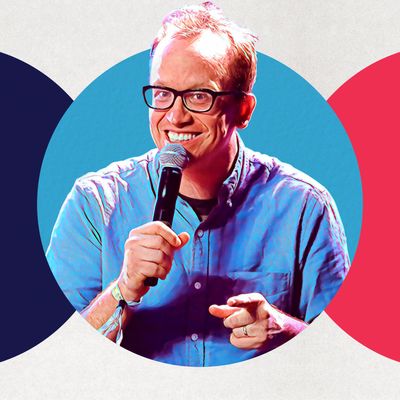
Around the same time, youd see him doing stand-up much more.
performed there multiple times without acknowledging what he did.
Listen to the episode and read a short excerpt of the discussion below.
Tune in toGood Oneevery Monday onApple Podcasts,Spotify, or wherever you get your podcasts.
You were known as an improviser in the city for so long, specifically at the UCB.
How did you transition into stand-up?My transition into solo work came in 2006.
Then those people ran shows and would invite me to come tell stories on their shows.
What was it like leaving the UCB?There were some big, major changes with UCB.
I helped lead the charge on those changes.
I wrote the curriculums for the schools.
I was burnt out on it.
Also, if Im being a little arrogant, it had started to feel a little too easy.
I knew what worked at UCB.
And I am just of a mentality where thats not okay.
If Im not working hard, what am I doing?
I didnt want to become the cliche archetype of the improviser who didnt know when to hang it up.
I saw you perform at the Comedy Cellar recently, which you know because I was almost kicked out.
Thats my cheap get the club audience to shut up joke I tell a get hard joke.
Thats the least hip joke anyone will ever see me do.
I had heard you say that you didnt audition to perform at the Comedy Cellar until afterCareer Suicidecame out.
Which is crazy.Ive been told by many comics there that it is crazy.
Why?Yeah, in many ways.
Its the most competitive comedy stage in the world.
My stuff should not work there.
I very often go up at 1 in the morning.
It shouldnt work for me to tell a seven-minute-long story about how I got bullied.
The fact that it does feels like an accomplishment.
I dont think there are many other stages that offer the same challenge.
What do you mean by that?I dont think jokes are truly good unless theyre universal.
I want to know that they work in Bushwick, where everybody else is also an artist.
I want to know they work down in Gowanus, where everybody probably listens to NPR.
I want to verify they work in the clubs where its all German tourists.
I want to check that its the Cellar, where its this rabid hungry crowd.
I want to check that they work at UCB, where everybody is hip and analytical.
I want to ensure they work at colleges, where they might get offended.
I want to ensure they work at clubs in every corner of the country.
I want to just confirm my shit is universal.
And clubs are the piece of the process where I know where theyre funny.
Brooklyn is the part where I know that theyre thoughtful and intellectual.
The road is where I know that they actually speak to people.
But what is it about clubs that make them better tests of things being funny?
Its specifically a power-structure-maintaining philosophy.
Funny is funny by that we mean funny is what we already do.
Funny is funny thats why we have seven men on the lineup.And I dont know if I agree withthat.
Like, yeah you’ve got the option to.
Also, people can get offended and you cant be a baby when they do.
I support your right to do that.
But then dont turn around and pretend that someones violating your rights when it hurts your feelings.
Theyre also allowed to have your feelings hurt.
Youre running that risk, so the respect has to run in both directions.
And if youre the artist, youre the one who is more culpable.
And thats why I know my shits funny.
And those are good hardworking people with great jokes.
A few weeks agoLouis C.K.
returned to the Comedy Cellar.
After much hubbub about it and the club considering their policy about him, he performed there again.
Neither time he addressed the things that he did.And that is my big problem to jump into it.
Do I believe in second chances?
I havent been there long enough to wag my finger, but Im not the only one.
People who will tweet at me, Why would you still perform there?
Should I trade that in because this guy did some things that are awful?
When people think the name Gary Gulman, they do not think your traditional stereotype of closed-minded comic.
Judah Friedlander good-hearted people who I think echo my own thoughts.
I dont think it is as cut and dry an answer as people would like it to be.
If my comedy hurts anybodys feelings it is generally my own.
Maybe not even when they ended.
Chris Rock and Dave Chappelle too.
That is actually an incredibly powerful thing.
So, I dont know that comedy needs to be a safe space for an audience.
There is a difference there.
You might see people that you walk away feeling that they are bad people, and that is okay.
This interview has been edited and condensed.
